

“If we light a light, it will spread itself.” ~ Sarala Behn
Among the many associates of Mahatma Gandhi, Sarala Behn is perhaps one of the least remembered. Yet few have left behind a more enduring experiment in Gandhi’s conception of Swaraj. Eight decades after its establishment in 1946, Lakshmi Ashram at Kausani, in the Kumaon region of Uttarakhand Himalaya, continues to renew itself through shared work, community living, self-discipline and responsibility for collective action. Established as the Kasturba Mahila Utthan Mandal, in memory of Kasturba Gandhi, it was conceived not merely as a school for rural girls, but as an experiment in cultivating women capable of exercising Swaraj in their own lives and communities.
Sarala Behn’s story is not simply about the past, although she passed away more than four decades ago. Lakshmi Ashram remains a living community. It continues to negotiate new social economic and institutional challenges while attempting to preserve the spirit of Gandhi’s Constructive Programme. The experiment therefore remains ongoing. It offers neither a blueprint nor a nostalgic return to another age, yet it provides glimpses of a live effort at self-rule, Swaraj at a micro level. The Ashram invites one to ask whether Gandhi’s understanding of Swaraj as a lived political culture still possesses meaning in the twenty-first century.
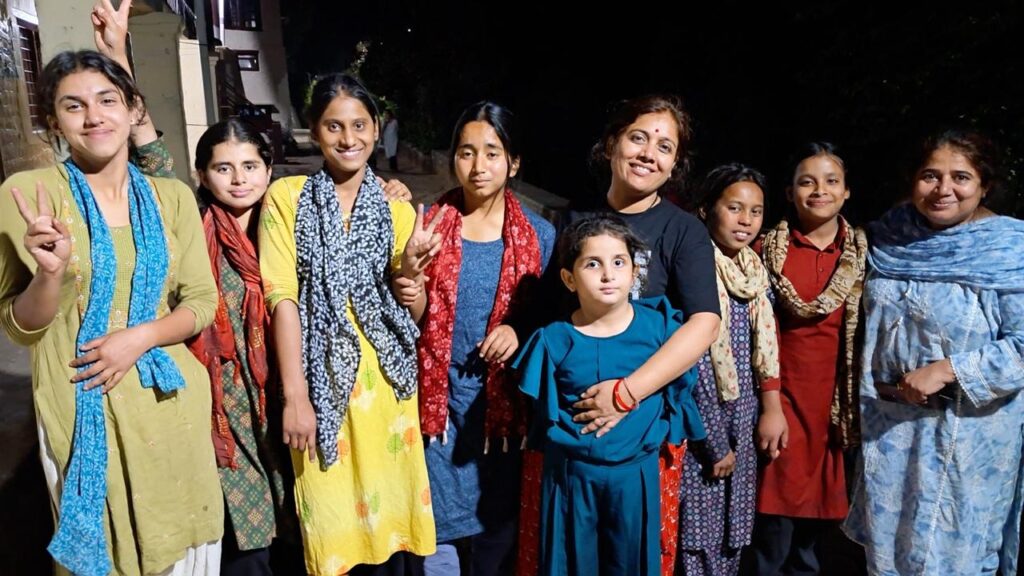
Sarala Behn did not establish Lakshmi Ashram as an institution to preserve ideas. She aimed to create a community through which ideas could continually renew relationships, and relationships could continually translate into collective action.
This continuing experiment also provides something that is increasingly rare. It offers experiential evidence, however modest and vulnerable, that constructive programmes were not merely a collection of social welfare activities. Gandhi conceived it as the continuous cultivation of capacities of individuals and communities to practice self-rule. Lakshmi Ashram demonstrates, however imperfectly, how such a political culture may be nurtured through everyday practices rather than through the institutions of political power.
Lakshmi Ashram: Swaraj Renewed through Daily Practice
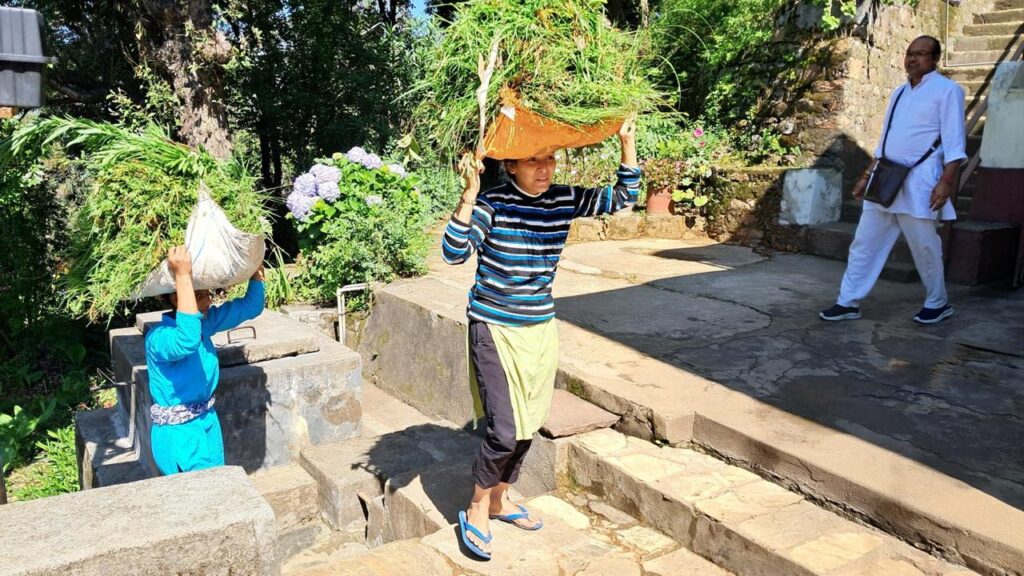
The life of Lakshmi Ashram is organised not around examinations or professional achievement, but around relationships. Young girls from remote Himalayan villages live together as a community where learning engages the hand, the head and the heart. A combination of physical labour and academic study, which includes a range of activities like agriculture, afforestation, baking, cooking, cleaning, caring for the sick, dairy, housekeeping, knitting, sanitation, songs, water harvesting, yoga and more.
Together with open interactions, sharing of experiences, and learning together, they continue to be a part of the collective decision-making, and implementation, all woven into a single educational experience. There may not be too many places that offer such a rich range of experiential learning opportunities for life skills. At the Ashram, Gandhi’s Nai Talim is not understood simply as an alternative pedagogy. It is an attempt to cultivate judgement, cooperation, dignity of labour, empathy and shared responsibility for collective action through lived experiences. Self-rule is learned not through abstract instruction but through the ordinary rhythms of community life.
The Ashram’s simplicity is often mistaken for austerity. Yet for those who live here, simplicity is not primarily an act of sacrifice. This is perhaps best reflected in the often spontaneous spurts of song triggered by a few, immediately attracting response from many residents as they join in. At morning and evening sarva dharma (encompassing all religions) prayers, songs of diverse nature, the devotional, the folk, and imagination for an India to be aspired for, all smoothly blend, not because of musical excellence, but because they seem to come from the heart of the singers. It is this joy experienced as freedom to act that comes from exercising self-restraint, mutual dependence and responsibility.
This is also reflected in the effort to collect every morsel of food from the kitchen utensils and individual plates, and carry it to the composting pit for conversion into manure for agriculture. Waste, after all, is a form of aggression or violence against humanity and nature, as Gandhi would say.
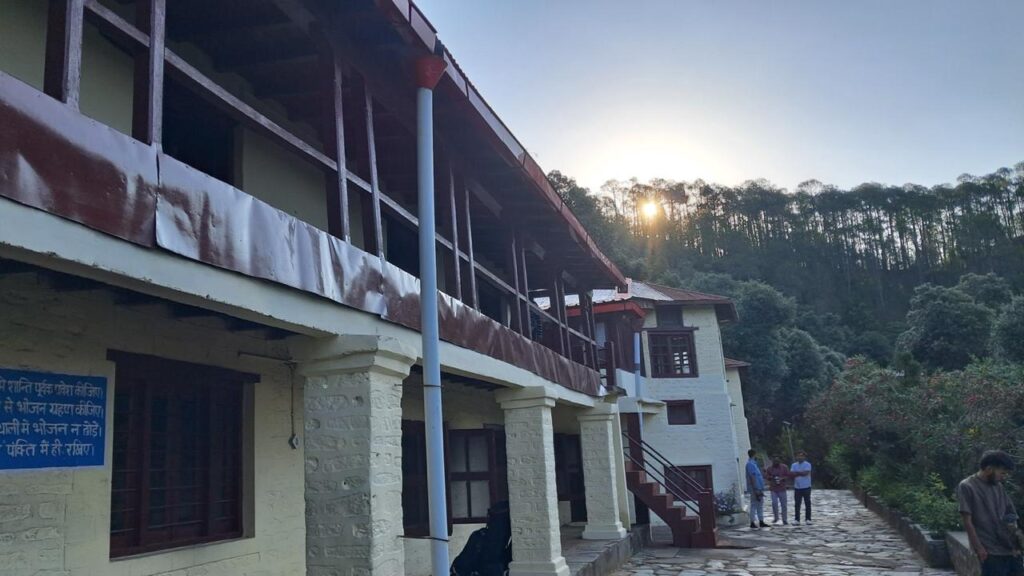
The community today prepares girls for recognised school-leaving examinations because legally sanctioned certification has become indispensable for higher education and most forms of formal employment. English, which Sarla behn saw as the language that colonised the mind, has been introduced alongside Hindi, because contemporary society increasingly expects competence in it, while the mother tongue of most residents, the Kumaoni, is commonly used in conversations. More recently, computer literacy has become part of the curriculum, recognising that digital technologies now shape everyday life.
Such plurality of experiences reinforces the richness in diversity, continuously underscoring the personal and collective exercise of agency to find meaning in new experiences by assessing their alignment with the ideals of Swaraj, as well as using the opportunity provided by those diverse experiences to scrutinise the relevance of Swaraj in changing times.
These changes are not celebrated simply as progress, nor resisted simply because they are modern. They are continually examined against a larger question: do these changes remain instruments serving human development, or do they begin to determine the purpose of education and reshape the meaning of being human?The struggle is not so much against change, but against surrendering judgement. Therefore, changes and even compromises that have had to be made over the decades are remembered and recognised.
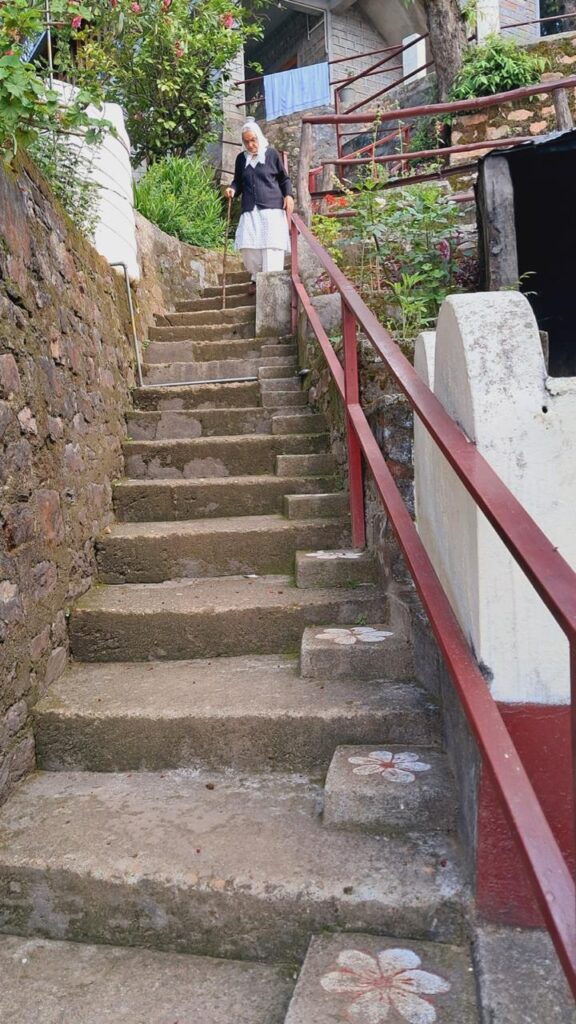
About a decade ago, for example, changes in educational regulations required that children within a specified age group attend formally recognised schools up to the eighth grade. Since Lakshmi Ashram is not legally recognised as a school under the prevailing regulatory framework, its younger girls were required to attend nearby government school. The issue was not whether the Ashram provided meaningful education; it was that a legally recognised and standardised model of schooling alone had come to define educational legitimacy. Increasingly, such mandatory educational certifications are becoming a substitute for true learning attainments.
The regulatory and administrative system of education was posing a fundamental challenge to “nai talim”, Gandhi’s philosophy and pedagogy of education was rooted to the local context on the ground. This emerging contradiction was recognised by many followers of Gandhi, including Vinoba Bhave, in the early 1950s.
Such examples illuminate a broader challenge confronting institutions of Swaraj today. As education, welfare and development become increasingly organised through legal regulation, standardisation, certification and administrative oversight, the space available for autonomous educational experiments steadily contracts. Lakshmi Ashram’s continuing task is therefore not simply to preserve an inherited tradition, but to exercise collective judgement about how to adapt without allowing external systems to become the organising principle of community life. A community that does not seek conformity, but nurtures the individuality of each member while renewing the relationship through the myriad forms of collective action necessary for sustaining both.
In this sense, Lakshmi Ashram provides a concrete illustration of one of Gandhi’s deepest political concerns. Swaraj depends not merely upon who governs, but upon preserving the capacity of individuals and communities to deliberate together about how they ought to live, and govern themselves. Constructive Programme, therefore, grew in importance in Gandhi’s understanding of the means of cultivating precisely that capacity for practicing Swaraj.
Lakshmi Ashram is today Sarala Behn’s most enduring legacy. Yet that legacy cannot be understood apart from the remarkable journey that made such an experiment possible. When Sarala Behn sought Gandhi’s blessings in the 1940s to establish the Kasturba Mahila Utthan Mandal in the Kumaon region of the Himalaya, she promised to devote twenty years of her life to nurturing it. She kept that promise. More than four decades after her death, the Ashram continues to bear witness to that commitment—fragile, diminished in scale, yet still renewing the spirit of Swaraj through daily practices. The Ashramites continue to refer to her as Behn-ji, or respected elder sister. To understand why this experiment continues to matter, the woman who chose to dedicate her life to it needs to be relooked.
Sarala Behn
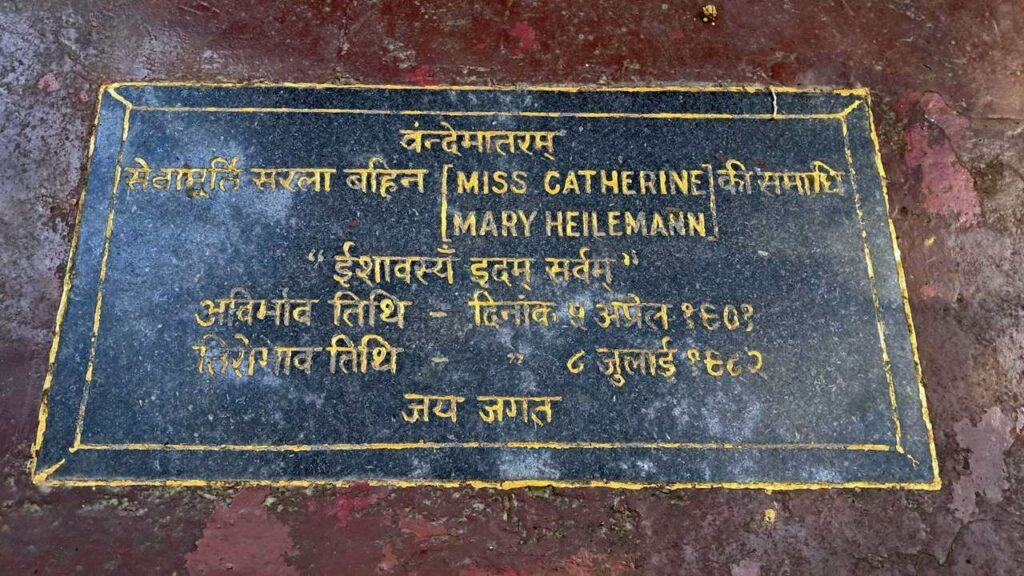
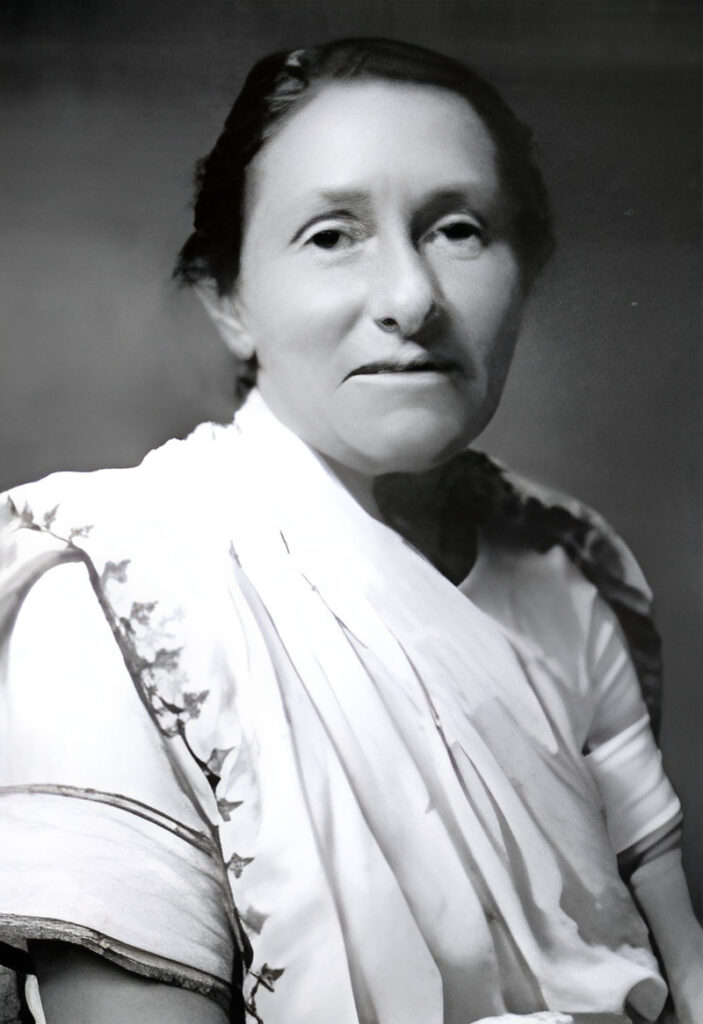
Born Catherine Mary Heilmann in England in 1901, Sarala Behn’s life reveals three qualities that perhaps made Lakshmi Ashram possible: an extraordinary intellectual commitment to understanding Gandhi’s ideas rather than merely repeating them; the moral resilience to persevere through decades of isolation, disappointment and political change; and an exceptional capacity to build relationships with unknown people and culture in the rural Himalayas, that allowed Constructive Programme to find roots in local communities in the hills.
She immersed herself in the freedom struggle, endured imprisonment during the Quit India movement, and eventually settled permanently in the Kumaon Himalaya. She had been served notice asking her not to leave her home, yet she dressed as a local woman, often went out unnoticed avoiding the attention of the sentry at her door. She was sentenced to prison twice, and served her sentence without complaints. She even surrendered her privileges as a European in Indian prison.
Ironically, decades later, following the India-China conflict of 1962, her movements in the Himalayan border districts were again subjected to official restrictions because she had remained a foreign national in the eyes of the law. The experience echoed, in a different political context, the suspicions she had known in Europe during her youth. It was one of the saddest moments in her life. Yet she continued to devote herself to the people among whom she had chosen to live.
In the last years of her life, aging and ailing, she is said to have been offered a helicopter ride to Delhi for free medical care by the government, but she declined. Gandhi’s call for Sarvodaya, welfare of all, particularly to identify with the poorest and the weakest, may have been in Sarala behn’s mind even at that stage. At 81, she breathed her last at a colleague’s home in Almora on July 8, 1982.
As Bidisha Mallik has argued, Sarala Behn was not merely Gandhi’s disciple but an original interpreter who extended Gandhian ideas creatively into the Himalayan context. Ramachandra Guha similarly recognises her as one of the crucial figures connecting Gandhi’s constructive work with the later social and environmental movements of the region.
Photo Credit: Barun Mitra
Selected Bibliography:
Devi, Sarala, A Life in Two Worlds: Autobiography of Mahatma Gandhi’s English Disciple. Translated by David Hopkins from the original in Hindi, Vyavaharik Vedant – Ek Atmakatha by Sarla Devi. (Nainital and Kausani: Pahar and Lakshmi Ashram, 2010).
Devi, Sarala, Reviving Our Dying Planet (Nainital: Gyanodaya Prakashan, 1982).
Gandhi, M.K. Basic Education (Nai Talim).
Gandhi, M.K. Constructive Programme: Its Meaning and Place.
Malik, Bidish, Legends in Gandhian Social Activism: Mira Behn and Sarala Behn: Addressing Environmental Issues By Dissolving Gender And Colonial Barriers (Singapore: Springer, 2022).
Guha, Ramachandra, Rebels against the Raj: Western Fighters for India’s Freedom (New Delhi: Penguin Random House India, 2022).