Skip to content
Save Kumaon logo Save Kumaon

कुदरती कुमाऊं खुशहाल कुमाऊँ

  • Home
    • Purpose & Mission
    • Save Kumaon Team
    • Contact Us
    • Partners
    • Privacy Policy
  • Himalaya
    • Himalaya – Overview
      • Himalaya & Climate Change
    • Water Security
      • Glaciers
      • Rivers, wetlands, groundwater
        • Reviving river, landscape restoration
    • Birds & Animals
      • Endangered Bird Species
    • Crops & Food
      • Pahadi food: रिमझिम बारिश के बीच पहाङी खाना
      • Millets Will Solve Problems
      • GM Crops – Relevance for Indian Agriculture
      • Seed Banks – Indigenous crops
      • Re-imagining Agriculture
    • Himalayan Trees & Plants
      • Rhododendrons in Spring
      • Bamaur! what a lyrical name…
      • Himalayan Flowers – Unsung heroes
  • Uttarakhand
    • Kumaon
      • Kumaon – an overview
      • History of Kumaon
      • Kumaon Geography
      • Lakshmi Ashram and Sarala Behn: Renewing Swaraj
      • Bakhli in Kumati, Nainital
      • Nainital Lake
      • Geeli Mitti: Building Sustainable Homes
      • Devabhoomi in images
    • Sacred Spaces
      • Jageshwar
      • Kedarnath
      • Char Dham Yatra – Travel Restrictions Lifted
    • Festivals
      • Nanda Devi Mela
      • कुमाऊं के त्योहार
      • Akshay Trithiya – Char Dham opening
      • Kedarnath – worship begins on 25 April 23
  • Blogs
    • Nanda Devi – First Glimpse
    • Reflections of a Fool on the Hill
    • The Boy Who Ran Away
  • Initiatives
    • Lakes of Kumaon: Nainital & Sukhatal
    • Borewell a no-no in Kumaon Himalayas
    • Save Sattal
    • Ganga Ahvaan – Call to Save Ganga
    • Nainital Landslide Zone, Balia Nala
    • Climate Talk at Doon University
    • छतौला : गाँव बचाओ कुमाऊं बचाओ
    • छ्तोला बचाओ
    • मियावाकी जंगल का निर्माण
  • Resources
    • Youtube Videos
    • Books
    • Restore the Rain – Book Review
    • Links to important resources
  • Gallery
    • Yellow-throated Marten
    • Devabhoomi – in images
Save Kumaon logo
Save Kumaon

कुदरती कुमाऊं खुशहाल कुमाऊँ

Endangered Bird Species

Rajiv Butalia, 19 July 202114 July 2026
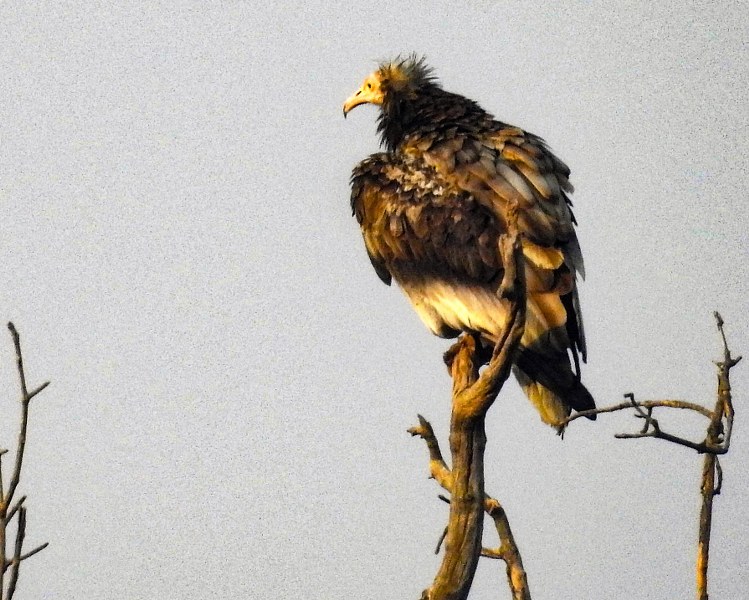
Endangered Egyptian Vulture
Endangered Egyptian Vulture Photo: Rajiv Butalia

Endangered bird species were first enumerated In 2014 in Uttarakhand by bird conservator Asad Rahmani and then State Chief Conservator of Forests, Dr. Dhananjai Mohan listed. 45 endangered bird species. They covered their findings in their  book “Threatened birds of Uttarakhand”. 

Identification, protection and monitoring of Important Bird Areas (IBAs) is a major global conservation programme initiated by Birdlife International and recognized and appreciated by many governments, NGOs and conservationists. Their book is an extension of the BNHS’s IBA programme to identify the threatened and near threatened bird species in Uttarakhand and to recommend measures for their long-term protection. Covering critically endangered (like Himalayan quail or mountain quail, white-backed or oriental white-rumped vulture), endangered (Egyptian vulture and black-bellied tern, malayan quail or mountain quail, pink-headed duck, white-bellied Heron, etc., endangered vulnerable (Western tragopan, marbled duck, sarus crane, etc.), and near threatened (Ferruginous duck, painted stork, great hornbill, etc.) species, the their enumeration contributes immensely in expanding the scope of conservation in India, taking it beyond tiger conservation to make it more inclusive.

The assessment of red listed bird species is updated on a global scale on a yearly basis by The International Union for Conservation of Nature and Birdlife International. Based on the 2012 red list, India has 87 threatened and 68 near threatened bird species. In Uttarakhand 45 state-specific, globally red listed bird species were identified, of-which 25 are threatened and 20 near-threatened.

Dhananjai Mohan has stated  that the most endangered birds of the state include four species of vultures: the White-rumped, Slender-billed and Red-headed are critically endangered while the White Vulture is  endangered. The Himalayan Quail, which was thought to be extinct, is on the state’s critically endangered list.

The State has an important role to play in the conservation of birds in the vulnerable group, which include Cheer Pheasant, Pallas’s Fish Eagle, Grey-crowned Prinia, and Yellow weaver and Great Slaty Woodpecker. This woodpecker has been found to have covered distances up to Indonesia.
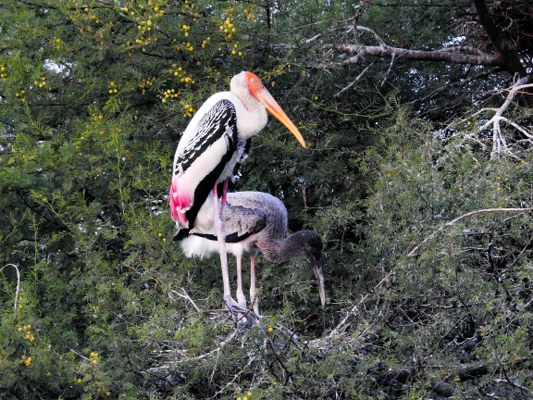
Painted Stork with Immature
Painted stork with immature. Photo: Rajiv Butalia

Birds play an important role in the ecosystem such as controlling population of insects and dispersal of seeds and aiding pollination.

The State of Uttarakhand has 686 bird species 

Critically Endangered
  • Himalayan Quail or Mountain Quail
  • White-backed or Oriental White-rumped Vulture
  • Slender-billed Vulture
  • Red-headed or King Vulture
  • Baer’s Pochard
Endangered
  • Egyptian Vulture
  • Black-bellied Tern
Vulnerable
  • Cheer Pheasant
  • Western Tragopan
  • Marbled Duck
  • Long-tailed Duck
  • Lesser White-fronted Goose
  • Wood Snipe
  • Lesser Adjutant
  • Pallas’s Fish-eagle
  • Indian Spotted Eagle
  • Eastern Imperial Eagle
  • Greater Spotted Eagle
  • Sarus Crane
  • Indian Skimmer
  • Great Slaty Woodpecker
  • Grey-crowned Prinia
  • Bristled Grassbird
  • Yellow Weaver
  • White-throated or Hodgson’s Bushchat
Near Threatened
  • Satyr Tragopan
  • Falcated Duck
  • Ferruginous Duck
  • Painted Stork
  • Black-necked Stork
  • Black-headed Ibis
  • Spot-billed Pelican
  • Oriental Darter
  • Laggar Falcon
  • Lesser Fish-eagle
  • Pallid Harrier
  • Cinereous Vulture
  • River Lapwing
  • Eurasian Curlew
  • Black-tailed Godwit
  • River Tern
  • Yellow-rumped Honeyguide
  • European Roller
  • Great Hornbill
  • Tyler’s Leaf Warbler
Blogs Baer’s Pochardcritically endangeredEndangered BirdHimalayan QuailKing VultureMountain Quailnear-threatenedOriental White-rumped VultureRed-headedSlender-billed VulturevulnerableWhite-backed

Post navigation

Previous post
Next post

Leave a Reply Cancel reply

Your email address will not be published. Required fields are marked *

"We do not inherit the earth from our ancestors, we borrow it from our children."
~anonymous

Reader Comments

  1. Rajan on Bakhli in Kumati, Nainital14 July 2026

    Very interesting!

  2. Simran Dhyani on Contact Us17 March 2026

    My name is Simran Dhyani, and I am a research scholar at the Centre for the Study of Social Systems…

  3. Ashish Sharma on छतौला : गाँव बचाओ कुमाऊं बचाओ21 February 2025

    It is the duty of every villager to keep his village safe. people of that village just have to understand…

  4. Apoorva on Geeli Mitti: Building Sustainable Homes13 November 2024

    Impressed. Want to visit & stay in mud house. Pls share more details 8126974888

  5. inder raj dowlath on Geeli Mitti: Building Sustainable Homes21 October 2024

    Very interesting. I'm 83 and still have dreams. Wohi Hoga Jo manjoor.. ...

Archives

  • 21 July 2026 by Romola Butalia Restore the Rain - Book Review
  • 20 July 2026 by Rajiv Butalia Yellow-throated Marten
  • 16 July 2026 by Rajiv Butalia Golden Jackal (Canis Aurous) : Call of the Wild
  • 15 July 2026 by Barun Mitra Lakshmi Ashram and Sarala Behn: Renewing Swaraj
  • 14 July 2026 by Rajiv Butalia Bakhli in Kumati, Nainital

Monthly Newsletter

Loading

    ©2026 Save Kumaon | WordPress Theme by SuperbThemes